
Introduction
Septic System Repair is important when your septic tank or drain field begins showing signs of trouble. Ignoring early warning signals can lead to unpleasant odors, slow drains, sewage backups, and costly property damage. Knowing what to look for can help homeowners take action before a minor issue becomes a major problem.
This guide to Septic System Repair explains seven warning signs, including standing water near the drain field, unusually green grass, gurgling pipes, and wastewater backing up into household drains. These symptoms may indicate blockages, an overloaded tank, damaged pipes, or other system problems.
Recognizing the need for Septic System Repair early can help protect your home, reduce health risks, and avoid expensive emergency work. If you notice persistent symptoms, contact a qualified septic professional for inspection and appropriate repairs.
What Are the Warning Signs of a Failing Septic System?
A failing septic system usually shows these signs:
- Slow drains and gurgling pipes
- Sewage smells indoors or outdoors
- Wastewater backing up into fixtures
- Standing water or soggy soil over the drain field
- Unusually lush, green grass near the tank
- Contaminated well water
- An overdue pump-out or an aging system
If you notice even one of these, call a licensed septic professional soon.
Sign One: Slow Drains and Gurgling Pipes
Slow drains are often the first clue. Sinks, showers, and toilets begin to empty more slowly than normal. Then you hear gurgling or bubbling sounds after you flush or run the washer.
These noises mean air is struggling to move through the plumbing system. A clogged pipe, a full tank, or a blocked effluent filter often causes this. Besides, one slow drain may point to a simple clog, but several slow drains at once point to the septic system itself.
What to Do
Stop heavy water use right away. Next, book an inspection before the problem grows. Additionally, you can read more about hidden pipe trouble in our guide to drain and sewer line repair.
Sign Two: Foul Sewage Odors
A healthy septic system should not smell. Therefore, a rotten egg or raw sewage odor deserves quick attention. You may notice it near the tank, around the leach field, or inside the house near drains.
These smells come from septic gases such as hydrogen sulfide. In fact, they often signal a full tank, a cracked lid, a leak, or a blocked vent pipe. Gas buildup is also a health risk, so do not ignore it.
More Read: Plumbing Repair: What Every Homeowner Should Know Before Something Goes Wrong
Sign Three: Sewage Backup Inside Your Home
A sewage backup is the clearest and most urgent warning. Wastewater may rise through floor drains, bathtubs, or toilets. As a result, you face unsanitary conditions and possible property damage.
Backups happen when the tank is full, the outlet baffle is blocked, or the drain field can no longer absorb water. Meanwhile, raw sewage carries bacteria and viruses. Keep children and pets away from the area, and call a professional immediately.
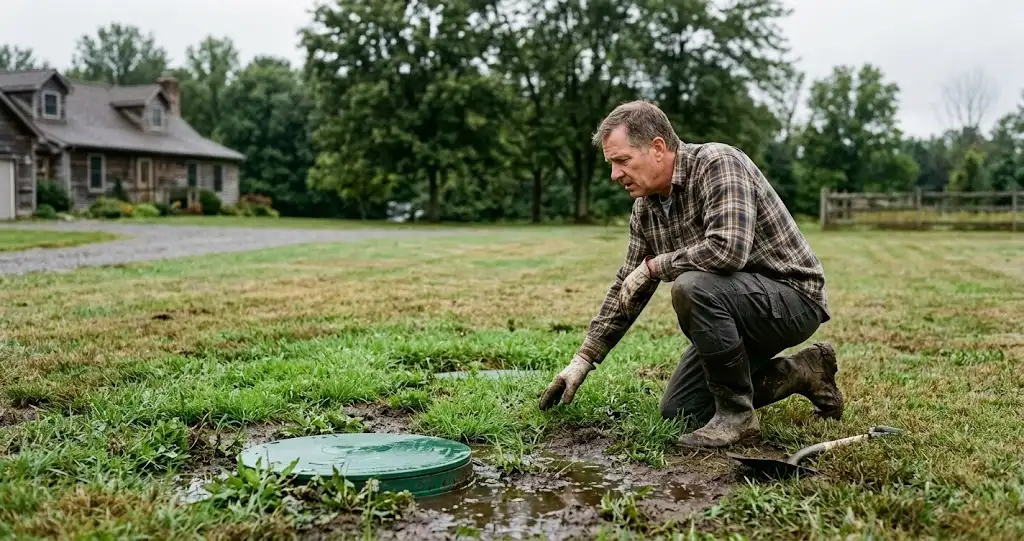
Sign Four: Standing Water or Soggy Ground Over the Drain Field
Pools of water near the tank or drain field are a red flag, especially when it has not rained. The ground may also feel spongy underfoot. Wastewater is likely surfacing instead of filtering through the soil.
This problem is called effluent surfacing. It can result from soil saturation, a clogged drain field, or a collapsed pipe. Moreover, a thick black layer called biomat can form in the soil and block drainage over time.
More Read: Leak Detection and Repair: Find Hidden Leaks Before They Cause Damage
Sign Five: Unusually Green, Lush Grass
Green grass looks nice, but too much of it over one spot can be a clue. Nutrient-rich wastewater acts like fertilizer. Consequently, the grass above a leaking line or tank grows faster and darker than the rest of the lawn.
This sign is easy to miss, particularly in summer. Still, a bright green patch in winter is even more suspicious. Compare that area with the rest of your yard each season.
Sign Six: Contaminated Well Water
If you use a private well, your septic system may affect your drinking water. A failing system can release bacteria, nitrates, and other pollutants into the groundwater. Test results showing coliform bacteria or high nitrate levels should prompt action.
Likewise, cloudy water or a strange taste may signal trouble. Stop drinking untreated water until a lab confirms it is safe. Then schedule a professional septic inspection.
Sign Seven: Overdue Pumping and an Aging System
Age and neglect cause many failures. Most experts advise pumping the tank every three to five years. Inspections should happen every one to three years. In contrast, a tank that fills up quickly may have a leak or a drainage fault.
Rising water bills can also point to leaks, blockages, or an overworked pump. Overall, a system past twenty or thirty years old deserves closer monitoring, although proper care can extend its life well beyond that.
More Read: Pipe Repair and Replacement: Step-by-Step Homeowner Guide
Warning Signs at a Glance
| Warning Sign | Likely Cause | Urgency |
| Slow drains and gurgling | Clog, full tank, blocked filter | Moderate |
| Sewage odors | Full tank, leak, cracked lid | High |
| Sewage backup | Blocked outlet, failed drain field | Emergency |
| Standing water | Saturated or clogged drain field | High |
| Lush green grass | Leaking pipe or tank | Moderate |
| Contaminated well water | Untreated effluent in groundwater | High |
| Overdue pumping | Neglected maintenance | Moderate |
Common Causes of Septic System Failure
Knowing the cause helps you prevent a repeat problem. The most frequent culprits include:
- Skipped septic tank pumping
- Tree roots invading pipes or the tank
- Flushing wipes, grease, or harsh chemicals
- Heavy vehicles driving over the drain field
- Excess water use from leaks or constant laundry loads
For instance, a running toilet can flood the drain field with extra water every day. For that reason, fix small leaks fast. A related problem often shows up in basements, so see our advice on sump pump repair if your yard stays wet.
How to Prevent Costly Septic Repairs
Prevention costs far less than replacement. Repairs can climb into the thousands, and a full replacement may cost even more. Follow these habits:
- Schedule routine pumping and inspection with a certified provider
- Spread laundry loads across the week
- Flush only toilet paper and human waste
- Keep trees and shrubs away from the drain field
- Redirect gutters and downspouts away from the system
- Keep records of every service visit
Note: This article offers general guidance. Local codes differ, so always rely on a licensed septic contractor for diagnosis and repair.
When to Call a Professional
Call right away if sewage backs up, surfaces on the lawn, or reaches your well. Otherwise, book an inspection when you notice slow drains, odors, or soggy patches. Early action keeps a small repair from becoming a major excavation.
A qualified inspector will check the tank levels, baffles, pipes, and drain field. Then they will explain your repair options in plain terms.
Frequently Asked Questions
How do I know if my septic tank is full?
Slow drains, gurgling pipes, and sewage odors usually show a full tank.
How often should a septic tank be pumped?
Most tanks need pumping every three to five years, depending on size and household use.
Can a septic system be repaired instead of replaced?
Yes, many problems like clogs, broken baffles, and cracked pipes are repairable.
Why is the grass greener over my septic tank?
Leaking wastewater feeds the grass like fertilizer, which signals a possible leak.
Is a septic backup an emergency?
Yes, because raw sewage is a health hazard and needs immediate professional help.
What happens if I ignore septic warning signs?
Small issues can grow into total system failure, groundwater pollution, and very costly repairs.
Conclusion
Septic problems rarely appear without warning. Slow drains, odors, backups, soggy soil, green patches, polluted well water, and missed pumping all tell you to act. Therefore, watch your system closely and schedule regular inspections.
Fix issues early, and you will protect your home, your health, and your budget. If any sign on this list sounds familiar, contact a licensed septic professional today.
More Read: Home Waterproofing Guide: Protecting Your Basement, Crawl Space, and Foundation