
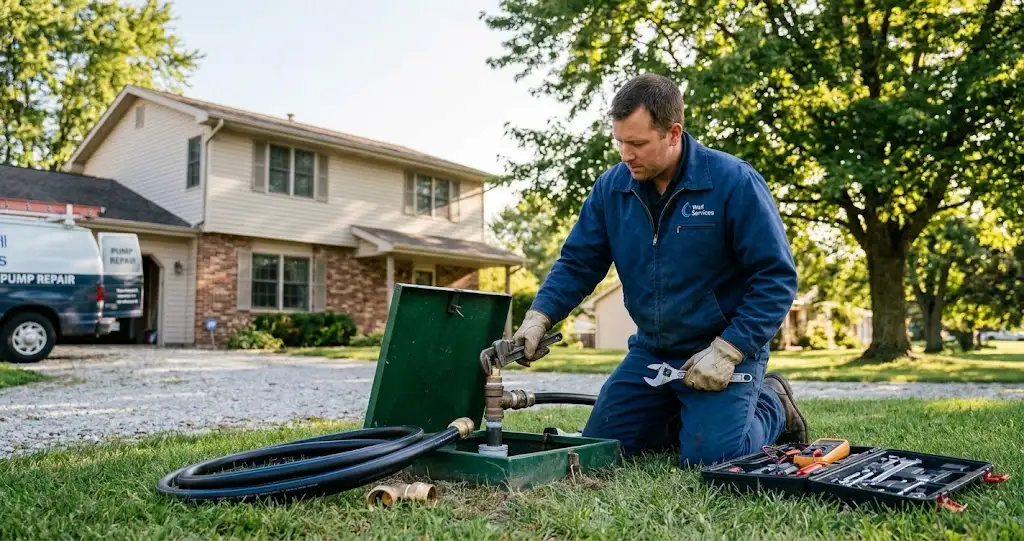
Well Pump Repair helps homeowners identify water supply problems, understand possible causes, and find suitable solutions before minor issues become expensive repairs. A well pump is essential for delivering a reliable supply of water to your home, so problems such as low water pressure, unusual noises, frequent cycling, or no water from faucets should not be ignored.
This guide to Well Pump Repair explains common pump issues, factors that influence repair costs, and practical troubleshooting steps. Whether you have a submersible pump or a jet pump, recognizing the warning signs can help you determine when professional assistance is needed. Understanding Well Pump Repair can also help you compare repair and replacement options, plan maintenance, and keep your water system operating efficiently. If problems persist, contact a qualified well pump technician for proper diagnosis.
What Does a Well Pump Do?
A well pump pulls groundwater from your well and pushes it into your home. A submersible pump sits deep inside the well. A jet pump sits above ground. Both work with a pressure tank and a pressure switch to keep water pressure steady.
When one part fails, the whole system suffers. Hence, a quick diagnosis matters.
Signs Your Well Pump Needs Repair
Watch for these warning signs:
- Low water pressure at faucets and showers
- Sputtering taps with air spurts
- No water at all
- Pump that short cycles (turns on and off too fast)
- Loud clicking, humming, or grinding noises
- Cloudy, brown, or gritty water
- A sudden jump in your electric bill
Ignore these signs and a small fix can turn into a full pump replacement.
Common Well Pump Problems and Solutions
Faulty Pressure Switch
The pressure switch tells the pump when to start and stop. Burnt or dirty contacts cause the pump to run nonstop or never start. A new switch is cheap and quick to install.
Failing Pressure Tank
A waterlogged pressure tank or a broken air bladder causes short cycling. Check the tank air charge first. Replace the tank if the bladder has failed.
Tripped Circuit Breaker or Wiring Faults
Electrical issues cause many pump failures. Reset the circuit breaker once. If it trips again, stop and call a licensed pro. A bad capacitor or damaged control box may be the cause.
Clogged Intake or Screen
Sand and sediment block the intake screen. Flow drops and the motor strains. A pro can clean the screen or flush the well.
Worn Impeller or Motor Burnout
An old impeller loses pumping power. Overheating then burns out the motor. Pumps usually last 10 to 15 years, so age plays a big role.
Leaks and Broken Pipes
A leaking drop pipe or check valve makes the pump work overtime. Pressure falls and bills rise.
More Read: Leak Detection & Repair: Find Hidden Leaks Before They Cause Damage
Dry Well or Low Water Table
Sometimes the pump is fine and the water table has dropped. Drought and heavy use are common causes. Test the well yield before you buy a new pump.
Well Pump Repair Cost
Costs vary by part, labor, and well depth. According to HomeAdvisor data, the average repair cost is about $971, and most jobs fall between $373 and $1,620. Labor often runs near $50 per hour, plus a service call fee of $100 to $150.
| Repair Item | Typical Cost |
| Pressure switch | About $30 for the part |
| Circuit breaker | $100 to $250 |
| Pressure tank replacement | $500 to $1,000 |
| Well pump repair (average) | $373 to $1,620 |
| Full pump replacement | $950 to $2,630 |
Your well depth, pump type, and local rates change the final bill. Deep wells cost more because pros need special equipment to pull the pump.
More Read: Plumbing Repair: What Every Homeowner Should Know Before Something Goes Wrong
Repair or Replace Your Well Pump?
Use this quick rule. Repair the pump when the problem is a single cheap part. Replace it when the pump is over 15 years old or fails again and again.
Consider these points:
- Repair bills near half the cost of a new pump signal replacement
- Older pumps lose energy efficiency
- Frequent breakdowns raise long-term costs
- A new pump often comes with a warranty
DIY Fixes vs Hiring a Pro
You can safely check the breaker, the pressure gauge, and the tank air charge. However, pulling a pump or handling wiring is risky. Licensed well contractors have the tools and expertise to do it right.
Besides, a pro can spot hidden damage that a quick look will miss. Always turn off the power before you touch any part of the system.
How to Prevent Well Pump Problems
Good habits cut repair bills. Follow these tips:
- Schedule a yearly well inspection
- Test your water for bacteria and nitrates each year
- Keep the area around the wellhead clear
- Replace worn parts early
- Avoid running the pump dry
- Fix leaks as soon as you find them
More Read: Home Waterproofing Guide: Protecting Your Basement, Crawl Space, and Foundation
How to Choose a Reliable Well Pump Technician
Experience matters here. Look for these traits:
- Valid license and insurance
- Clear written estimates
- Good local reviews
- Fast emergency service
- Honest advice on repair versus replacement
Ask about past jobs similar to yours. A trustworthy pro will explain every step in plain words.
If your home also has drainage trouble, read our guide on sump pump repair to protect your basement. Likewise, bad water quality can point to pipe issues, so check our pipe repair and replacement guide.
More Read: Water Heater Repair Guide: 10 Common Problems, Solutions
Frequently Asked Questions
How much does well pump repair cost?
Most repairs cost between $373 and $1,620, with an average near $971.
How long does a well pump last?
A well pump usually lasts 10 to 15 years with proper care.
Why is my well pump running constantly?
A bad pressure switch, a leak, or a failing tank usually causes nonstop running.
Can I repair a well pump myself?
You can check the breaker and pressure settings, but a pro should handle the pump itself.
What causes low water pressure from a well?
Clogged screens, a worn pump, a bad switch, or a failing pressure tank cause it.
Is it better to repair or replace a well pump?
Repair a young pump with one bad part, and replace an aging pump that keeps failing.
Does homeowners insurance cover well pump repair?
Most policies cover only sudden damage, not normal wear and tear.
Conclusion
Well pump trouble rarely fixes itself. Watch for low pressure, strange noises, and short cycling. Then act early, compare quotes, and choose a licensed pro. Regular maintenance costs far less than an emergency pump replacement. Protect your well today, and your family will enjoy clean, steady water for years.

Pingback: Water Softener Repair: Fix Common Problems Step by Step